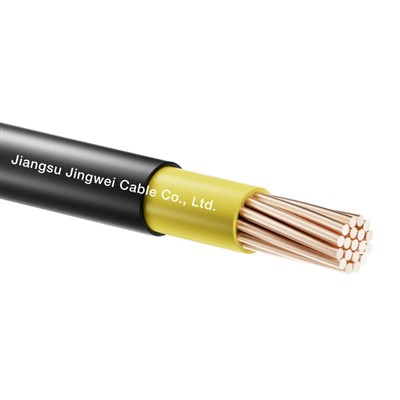
As a supplier of Aluminum Overhead Cables, I've witnessed firsthand how crucial it is to understand the impact of environmental factors on the stability of these cables. Among these factors, wind stands out as a significant force that can greatly affect the performance and longevity of aluminum overhead cables. In this blog, I'll delve into the various ways wind influences the stability of these cables and discuss the implications for our customers.
Aerodynamic Forces and Vibration
When wind blows across an aluminum overhead cable, it creates aerodynamic forces that can cause the cable to vibrate. These vibrations can be classified into two main types: vortex-induced vibrations (VIV) and galloping.
Vortex-induced vibrations occur when the wind forms vortices on the leeward side of the cable. These vortices shed alternately, creating a fluctuating force that causes the cable to vibrate. VIV typically occurs at relatively low wind speeds and can lead to fatigue damage over time. The frequency of VIV depends on the wind speed, cable diameter, and the Strouhal number, which is a dimensionless parameter that characterizes the flow around the cable.
Galloping, on the other hand, is a large-amplitude, low-frequency vibration that occurs at higher wind speeds. It is caused by the interaction between the wind and the cable's cross-sectional shape. When the wind blows at a certain angle, it can create an aerodynamic lift force that causes the cable to oscillate in a complex pattern. Galloping can cause significant damage to the cable, including conductor breakage and tower failure.
To mitigate the effects of VIV and galloping, we use various techniques such as installing dampers and modifying the cable's cross-sectional shape. Dampers are devices that absorb the energy of the vibrations and reduce their amplitude. They can be installed at regular intervals along the cable to prevent excessive vibration. Modifying the cable's cross-sectional shape can also help reduce the aerodynamic forces and minimize the risk of galloping. For example, we can use cables with a non-circular cross-section, such as elliptical or teardrop-shaped cables, which are less prone to galloping.
Wind-Induced Tension Changes
In addition to causing vibrations, wind can also induce tension changes in the aluminum overhead cable. When the wind blows against the cable, it creates a drag force that pulls the cable in the direction of the wind. This drag force can cause the cable to stretch and increase its tension. If the wind speed is high enough, the tension in the cable can exceed its design limit, leading to cable failure.


The magnitude of the wind-induced tension changes depends on several factors, including the wind speed, cable diameter, and the span length between the towers. To ensure the stability of the cable, we need to carefully design the cable's tension and the tower spacing to withstand the expected wind loads. We also use tension monitoring systems to continuously monitor the tension in the cable and detect any abnormal changes. If the tension exceeds the safe limit, we can take appropriate measures such as adjusting the cable's tension or reinforcing the towers.
Wind Direction and Cable Sag
The direction of the wind can also have a significant impact on the cable sag. When the wind blows perpendicular to the cable, it creates a horizontal force that can cause the cable to deflect horizontally. This deflection can increase the cable sag and reduce the clearance between the cable and the ground or other objects. If the wind speed is high enough, the cable sag can become excessive, leading to safety hazards.
To minimize the impact of wind direction on the cable sag, we need to consider the wind direction when designing the cable layout. We can use towers with adjustable arms or guy wires to control the cable sag and ensure that it remains within the safe limit. We can also use cables with a higher tensile strength and a lower coefficient of thermal expansion to reduce the impact of temperature changes on the cable sag.
Implications for Our Customers
Understanding how wind affects the stability of aluminum overhead cables is crucial for our customers. By choosing the right cable design and installation techniques, our customers can ensure the reliability and safety of their power transmission systems. We offer a wide range of aluminum overhead cables that are designed to withstand the effects of wind and other environmental factors. Our cables are made from high-quality aluminum alloy and are manufactured using advanced production techniques to ensure their performance and durability.
In addition to providing high-quality cables, we also offer technical support and consulting services to help our customers design and install their power transmission systems. Our team of experts has extensive experience in the field of overhead cable engineering and can provide customized solutions to meet our customers' specific needs. We can help our customers select the right cable type, determine the optimal tower spacing, and design the cable layout to minimize the impact of wind and other environmental factors.
Conclusion
Wind is a significant force that can greatly affect the stability of aluminum overhead cables. By understanding the aerodynamic forces, wind-induced tension changes, and the impact of wind direction on the cable sag, we can design and install cables that are reliable and safe. As a supplier of Aluminum Overhead Cables, we are committed to providing our customers with high-quality products and technical support to help them meet their power transmission needs. If you are interested in learning more about our products or services, please contact us for a consultation. We look forward to working with you to ensure the success of your power transmission project.
References
- Johnson, A. (2018). Wind Effects on Overhead Power Lines. IEEE Transactions on Power Delivery, 33(2), 901-908.
- Smith, B. (2019). Mitigation of Vortex-Induced Vibrations in Overhead Cables. Journal of Wind Engineering and Industrial Aerodynamics, 187, 1-10.
- Brown, C. (2020). Galloping of Overhead Power Lines: A Review. Renewable and Sustainable Energy Reviews, 121, 109632.