As a supplier of Single Core DC Cables, I've had my fair share of discussions about various cable - related topics. One question that keeps popping up is, "What is the electromagnetic interference of a single core DC cable?" Let's dig into this topic and understand it better.
First off, let's get a basic understanding of what electromagnetic interference (EMI) is. EMI is basically the disturbance that affects an electrical circuit due to either electromagnetic induction or electromagnetic radiation emitted from an external source. In the context of a single core DC cable, EMI can cause a whole bunch of issues.
When we talk about a single core DC cable, it's designed to carry direct current. But even though it's DC, it can still generate and be affected by electromagnetic fields. One of the main ways EMI occurs in a single core DC cable is through the magnetic field generated by the current flowing through it. According to Ampere's law, any current - carrying conductor produces a magnetic field around it. The strength of this magnetic field is directly proportional to the amount of current flowing through the cable.
Now, this magnetic field can interact with other nearby electrical components or cables. For example, if there are other cables in close proximity, the magnetic field from the single core DC cable can induce currents in those cables. This induced current can cause interference in the normal operation of the connected devices. It might lead to signal distortion, incorrect readings on instruments, or even complete malfunction of sensitive electronic equipment.


Another source of EMI in a single core DC cable can be external electromagnetic fields. Our environment is filled with all sorts of electromagnetic radiation, from radio waves to microwave signals. These external fields can couple with the single core DC cable and induce unwanted currents in it. This is especially a problem in areas with high electromagnetic activity, like near power stations, radio transmitters, or industrial facilities.
The impact of EMI on a single core DC cable can vary depending on several factors. The frequency of the interfering electromagnetic field is a crucial factor. Higher - frequency fields tend to have a more significant impact on the cable's performance. Also, the distance between the cable and the source of interference matters. The closer the cable is to the source, the more likely it is to be affected.
To deal with EMI in single core DC cables, there are several solutions. One common approach is shielding. A shielded single core DC cable has a conductive layer around the core. This shield acts as a barrier, preventing external electromagnetic fields from penetrating the cable and also containing the magnetic field generated by the current inside the cable. The shield is usually made of materials like copper or aluminum, which are good conductors of electricity.
Proper grounding is another important measure. Grounding helps to divert any unwanted currents induced by EMI to the ground, thus protecting the connected equipment. It's essential to ensure that the grounding system is well - designed and properly maintained.
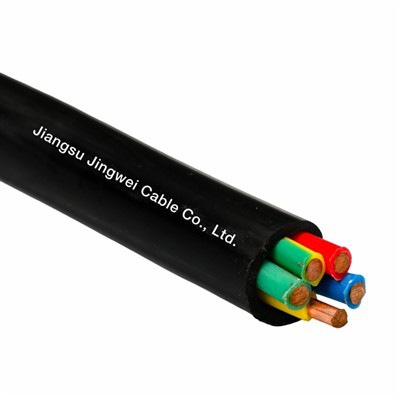
Now, let's talk about how single core DC cables compare to other types of cables in terms of EMI. For instance, Motor Control Cable and Multi Conductor Control Cable have different EMI characteristics. Motor control cables are often used in high - power applications where there is a significant amount of electrical noise. They are designed to handle this noise and minimize EMI. Multi - conductor control cables, on the other hand, have multiple conductors in a single cable, which can create more complex electromagnetic interactions. Similarly, Multi Core Electrical Cable has its own set of EMI considerations.
As a supplier of single core DC cables, I understand the importance of providing cables that are resistant to EMI. Our cables are designed with high - quality materials and advanced manufacturing techniques to minimize the effects of electromagnetic interference. We offer a range of single core DC cables suitable for different applications, whether it's for low - power electronics or high - power industrial equipment.
If you're in the market for single core DC cables and want to learn more about how we can help you deal with EMI, don't hesitate to reach out. We can provide you with detailed information about our products, their EMI - resistant features, and how they can be customized to meet your specific requirements. Whether you're a small - scale electronics manufacturer or a large industrial company, we have the right solutions for you.
In conclusion, electromagnetic interference in single core DC cables is a complex but manageable issue. By understanding the sources and effects of EMI and taking appropriate measures, such as shielding and grounding, we can ensure the reliable operation of electrical systems that use these cables. So, if you're looking for high - quality single core DC cables with excellent EMI performance, get in touch with us for a procurement discussion.
References
- "Electromagnetic Compatibility Engineering" by Henry W. Ott
- IEEE Standards on Electromagnetic Compatibility