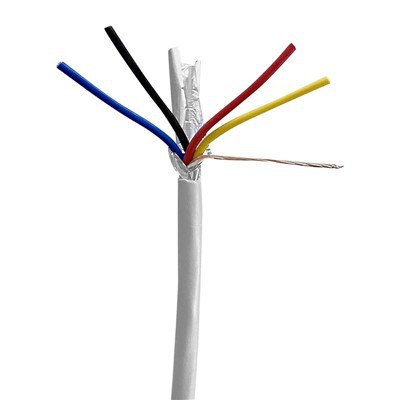
Hey there! As a control cable supplier, I often get asked about the insulation materials used in control cables. It's a super important topic because the right insulation can make a huge difference in the performance and lifespan of the cable. So, let's dive into what these insulation materials are all about.
First off, what exactly is insulation in a control cable? Well, insulation is like a protective layer around the conductors in the cable. Its main job is to prevent the flow of electric current from the conductors to other parts of the cable or to the environment. This not only keeps the electrical signals within the cable but also ensures safety.
One of the most common insulation materials for control cables is PVC, which stands for polyvinyl chloride. PVC is a popular choice because it's relatively inexpensive and easy to work with. It has good electrical insulation properties and is resistant to moisture, chemicals, and abrasion. This makes it suitable for a wide range of applications, from indoor wiring to outdoor installations. For example, in a factory setting, PVC-insulated control cables can be used to connect various machines and equipment. You can find more about different types of control cables like Motor Control Cable which might use PVC insulation.
Another widely used insulation material is polyethylene. Polyethylene has excellent electrical properties, including low dielectric constant and high insulation resistance. It's also very flexible, which makes it great for applications where the cable needs to be bent or routed around tight spaces. Polyethylene is often used in high-frequency applications because it can minimize signal loss. For instance, in telecommunications or data transmission systems, polyethylene-insulated control cables can ensure reliable signal transfer. If you're interested in the wire aspect of control cables, check out Control Cable Wire.
Cross-linked polyethylene (XLPE) is a variation of polyethylene. The cross-linking process enhances its mechanical and thermal properties. XLPE can withstand higher temperatures compared to regular polyethylene, making it suitable for applications where the cable might be exposed to heat. It's commonly used in power distribution and industrial control systems. For example, in a power plant, XLPE-insulated control cables can be used to connect control panels and monitoring equipment.
Silicone rubber is another insulation material that has its own set of advantages. It has excellent heat resistance, flexibility, and weather resistance. Silicone rubber insulation can withstand extreme temperatures, both high and low, without losing its properties. This makes it ideal for applications in harsh environments, such as aerospace, automotive, and outdoor electrical installations. If you're dealing with irrigation systems, Irrigation Control Cable might use silicone rubber insulation to withstand the outdoor elements.


Fluoropolymers, such as PTFE (polytetrafluoroethylene), are known for their exceptional chemical resistance and high-temperature performance. PTFE has a very low coefficient of friction, which makes it easy to pull the cable through conduits. It's often used in applications where the cable needs to be resistant to chemicals, solvents, and high temperatures, like in chemical plants or laboratories.
Now, when choosing the right insulation material for a control cable, there are several factors to consider. The first is the operating environment. If the cable is going to be used in a wet or humid environment, a moisture-resistant insulation like PVC or XLPE might be a good choice. If the cable will be exposed to high temperatures, materials like XLPE or silicone rubber would be more suitable.
The electrical requirements also play a crucial role. For high-frequency applications, materials with low dielectric constant, such as polyethylene or PTFE, are preferred to minimize signal loss. The mechanical requirements, such as flexibility and abrasion resistance, are also important. If the cable needs to be bent or moved frequently, a flexible insulation material like polyethylene or silicone rubber would be ideal.
As a control cable supplier, I understand the importance of choosing the right insulation material for your specific needs. We offer a wide range of control cables with different insulation materials to meet various requirements. Whether you're looking for a cable for a small-scale project or a large industrial application, we've got you covered.
If you're interested in learning more about our control cables or have any questions about insulation materials, feel free to reach out. We're here to help you make the right choice for your project. Don't hesitate to start a conversation with us to discuss your requirements and get a quote.
References:
- Electrical Wiring Handbook
- Cable Engineering and Technology
So, that's a wrap on the insulation materials of control cables. I hope this blog has given you a better understanding of what goes into making a good control cable. If you have any more questions or need further information, just drop us a line. We're always happy to assist!