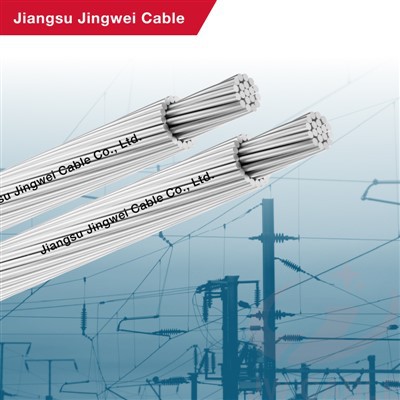
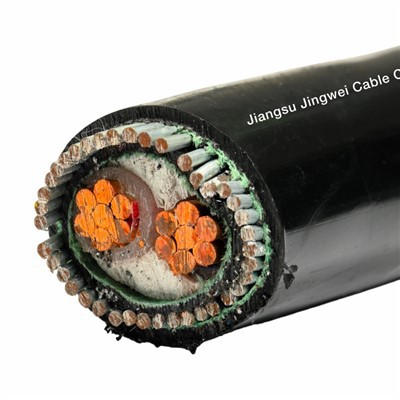
Hey there! As a supplier of Overhead Power Lines, I'm super stoked to share with you how these bad boys transmit electricity. It's a pretty fascinating process, and I'll break it down for you in a way that's easy to understand.
Let's start with the basics. Overhead power lines are like the highways of the electrical world. They carry electricity from power plants to our homes, businesses, and industries. The whole system is designed to efficiently move large amounts of electrical energy over long distances.
First off, we need to talk about the power source. Power plants generate electricity through various means, like burning fossil fuels, using nuclear energy, or harnessing renewable sources such as wind, solar, and hydro. Once the electricity is generated, it's sent out into the grid.


The voltage of the electricity generated at the power plant is usually quite low. But for efficient long - distance transmission, we need to boost that voltage up. This is where transformers come in. Step - up transformers at the power plant increase the voltage of the electricity. High - voltage transmission is key because it reduces the amount of power lost as heat during transmission. The higher the voltage, the lower the current for a given amount of power (since P = VI, where P is power, V is voltage, and I is current). And less current means less heat loss according to the formula P_loss = I²R, where R is the resistance of the power line.
Now, let's get to the Overhead Power Lines themselves. These lines are made of conductive materials. One of the most common materials used is aluminum. The Aluminium Overhead Line Conductor is popular because it's lightweight, relatively inexpensive, and has good conductivity.
The power lines are strung between tall towers. These towers are strategically placed along the transmission route. They need to be strong enough to support the weight of the power lines, especially during harsh weather conditions like high winds, heavy snow, or ice storms. The spacing between the towers is carefully calculated based on the type of power line, the terrain, and the expected loads.
The power lines are usually arranged in a specific configuration. There are typically three phases of alternating current (AC) in a high - voltage transmission system. This three - phase system is more efficient than single - phase systems for transmitting large amounts of power. The three phases are out of phase with each other by 120 degrees, which helps to balance the load and reduce the overall size of the conductors needed.
Another important component is the Overhead Messenger Cable. This cable runs parallel to the power lines and provides additional support. It helps to keep the power lines in place and can also be used to carry communication lines in some cases.
As the electricity travels along the Overhead Power Lines, it's constantly monitored. There are sensors and monitoring equipment installed at various points along the line. These devices can detect things like changes in voltage, current, and temperature. If there's a problem, like a short - circuit or a line break, the monitoring system can quickly alert the operators, who can then take appropriate action to fix the issue.
When the electricity gets closer to the end - users, the voltage needs to be stepped down again. This is done using step - down transformers at substations. The substations are like distribution hubs. They take the high - voltage electricity from the transmission lines and convert it to a lower voltage that's suitable for use in homes and businesses.
From the substations, the electricity is then sent out through a network of lower - voltage distribution lines. These lines are usually smaller and are installed closer to the ground. They carry the electricity to individual buildings and neighborhoods.
Now, you might be wondering about the safety of Overhead Power Lines. Safety is a top priority. The power lines are designed with insulation and safety features to prevent electrical shocks. The towers are also built to be stable and resistant to natural disasters. And of course, there are strict regulations and standards that govern the installation and maintenance of these lines.
If you're in the market for Overhead Power Lines, we've got you covered. Our Overhead Power Lines are of the highest quality. We use the latest technology and materials to ensure efficient and reliable electricity transmission. Whether you're a utility company, an industrial facility, or a large - scale construction project, we can provide the right solution for your needs.
If you're interested in learning more or want to discuss a potential purchase, don't hesitate to reach out. We're here to answer all your questions and help you find the best Overhead Power Lines for your specific requirements.
References:
- Electrical Engineering textbooks on power systems
- Industry reports on overhead power line technology and safety standards