In the realm of electrical engineering, understanding the nuances of cable performance is crucial for ensuring efficient and reliable power transmission. One phenomenon that significantly impacts the performance of single core DC cables is the skin effect. As a leading supplier of Single Core Dc Cable, I am well - versed in the intricacies of this concept and its implications for cable design and operation.
What is the Skin Effect?
The skin effect is a phenomenon that occurs when an alternating current (AC) or, to a lesser extent, a direct current (DC) flows through a conductor. In an ideal situation, we would expect the current to be uniformly distributed across the cross - section of the conductor. However, in reality, the current density is not evenly spread.
When an electric current flows through a conductor, it generates a magnetic field around it. According to Faraday's law of electromagnetic induction, this changing magnetic field induces eddy currents within the conductor itself. These eddy currents oppose the flow of the original current, and as a result, the current density is higher near the surface of the conductor and decreases towards the center.
In a single core DC cable, although the skin effect is not as pronounced as in AC cables, it still exists. This is because even in a DC system, there can be small fluctuations in the current, such as during start - up, shutdown, or due to load variations. These fluctuations create a time - varying magnetic field, which in turn induces eddy currents and causes the skin effect.
Factors Affecting the Skin Effect in Single Core DC Cables
Several factors influence the degree of the skin effect in single core DC cables.
Frequency
Although DC is considered a non - alternating current, any small variations in the current can be thought of as having a low - frequency component. The higher the frequency of these variations, the more pronounced the skin effect. For example, in a DC system with rapid load changes, the skin effect will be more noticeable compared to a system with stable loads.
Conductor Material
The conductivity and magnetic properties of the conductor material play a significant role. Materials with high conductivity, such as copper, are commonly used in Copper Control Cable. Copper has a relatively low resistivity, which means that it allows current to flow more easily. However, its magnetic properties also contribute to the formation of eddy currents. Materials with higher magnetic permeability will experience a more significant skin effect.
Conductor Diameter
The diameter of the conductor is another important factor. Larger diameter conductors are more susceptible to the skin effect. As the diameter increases, the distance from the surface to the center of the conductor also increases, and the eddy currents have more space to circulate, resulting in a greater reduction in current density at the center.
Implications of the Skin Effect in Single Core DC Cables
The skin effect has several implications for the performance and design of single core DC cables.
Increased Resistance
One of the most significant effects of the skin effect is an increase in the effective resistance of the cable. Since the current is concentrated near the surface, the cross - sectional area available for current flow is effectively reduced. According to Ohm's law (V = IR), an increase in resistance leads to an increase in power loss (P = I²R). This means that more energy is dissipated as heat, reducing the overall efficiency of the cable.
Temperature Rise
The increased power loss due to the skin effect causes the cable to heat up. Excessive temperature rise can damage the cable insulation, leading to premature failure. It is essential to consider the skin effect when designing the cable to ensure that it can operate within a safe temperature range.
Current - Carrying Capacity
The skin effect reduces the current - carrying capacity of the cable. Since the current is not uniformly distributed, the cable cannot carry as much current as it would if there were no skin effect. This can limit the power that can be transmitted through the cable and may require the use of larger - diameter cables to meet the required current capacity.
Mitigating the Skin Effect in Single Core DC Cables
There are several ways to mitigate the skin effect in single core DC cables.
Using Stranded Conductors
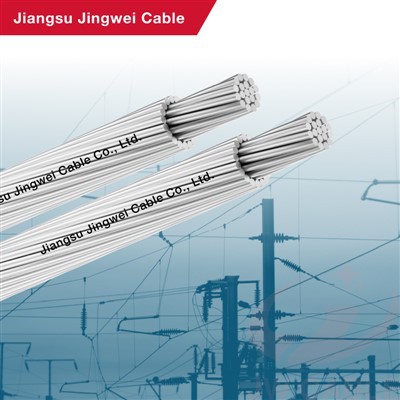
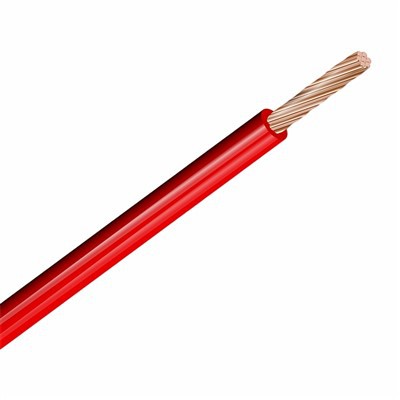
Stranded conductors consist of multiple small wires twisted together. This increases the surface area of the conductor and reduces the effective diameter of each individual wire. As a result, the skin effect is less pronounced compared to a solid conductor of the same overall diameter.
Employing Multiple Conductors
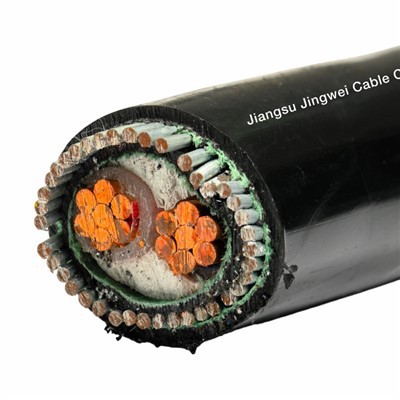
In some cases, using multiple smaller - diameter conductors in parallel can be more effective than using a single large - diameter conductor. This approach increases the total surface area available for current flow and reduces the impact of the skin effect.
Selecting the Right Material
Choosing a conductor material with low magnetic permeability can help reduce the skin effect. For example, some non - magnetic materials can be used to minimize the formation of eddy currents.
Applications and Considerations
Single core DC cables are widely used in various applications, such as renewable energy systems (e.g., solar power plants), battery storage systems, and electric vehicle charging stations. In these applications, understanding and managing the skin effect is crucial for ensuring optimal performance.


In solar power plants, for instance, the DC cables are used to transmit the electricity generated by the solar panels to the inverters. The skin effect can cause power losses, which reduce the overall efficiency of the system. By using cables with proper design and materials to mitigate the skin effect, the energy output can be maximized.
In battery storage systems, the DC cables are used to connect the batteries to the power grid or other loads. The skin effect can affect the charging and discharging efficiency of the batteries. Therefore, careful consideration of cable design is necessary to ensure reliable and efficient operation.
Conclusion
The skin effect is an important phenomenon that affects the performance of single core DC cables. As a supplier of Single Core Dc Cable, I understand the challenges and opportunities associated with this concept. By carefully considering the factors that influence the skin effect and implementing appropriate mitigation strategies, we can design and supply cables that offer high efficiency, reliability, and long - term performance.
If you are in need of high - quality single core DC cables or have any questions about the skin effect and its implications for your application, we are here to help. Our team of experts can provide you with the technical support and guidance you need to make the right choices for your project. Contact us to discuss your requirements and explore how our products can meet your needs.
References
- Grover, F. W. (1946). Inductance Calculations: Working Formulas and Tables. Dover Publications.
- Popovic, Z. D. (1987). Introductory Circuit Analysis. Prentice - Hall.
- Hayt, W. H., & Kemmerly, J. E. (2001). Engineering Circuit Analysis. McGraw - Hill.