As a supplier of Single Core DC Cables, I often encounter questions from customers about the suitability of these cables for various applications, especially in battery charging circuits. In this blog, I will delve into the technical aspects to determine whether a single core DC cable can be used in a battery charging circuit.
Understanding Single Core DC Cables
Single Core DC cables are designed to carry direct current (DC) in a single conductor. They are commonly used in a wide range of applications where a simple and efficient way to transfer electrical power is required. These cables are typically made of a single copper or aluminum conductor, insulated with materials such as PVC, polyethylene, or rubber to prevent electrical leakage and ensure safety.
The main advantage of single core DC cables is their simplicity and cost - effectiveness. They are easy to install and can be used in a variety of environments. However, their performance is also limited by factors such as the cable's cross - sectional area, length, and the amount of current they can carry.
Battery Charging Circuits: Requirements and Considerations
Battery charging circuits are designed to supply the appropriate amount of electrical energy to recharge a battery. The requirements of a battery charging circuit depend on the type of battery, its capacity, and the charging method. For example, lead - acid batteries, lithium - ion batteries, and nickel - cadmium batteries have different charging characteristics and voltage requirements.
When designing a battery charging circuit, several factors need to be considered:
- Current Capacity: The cable must be able to carry the charging current without overheating. Overheating can cause damage to the cable insulation and reduce its lifespan.
- Voltage Drop: A significant voltage drop in the cable can affect the charging efficiency and the performance of the battery. The voltage drop should be minimized to ensure that the battery receives the correct charging voltage.
- Safety: The cable must be able to withstand the electrical stress and environmental conditions without posing a safety hazard. This includes protection against short - circuits, over - current, and over - voltage.
Can a Single Core DC Cable be Used in a Battery Charging Circuit?
The answer is yes, a single core DC cable can be used in a battery charging circuit, but with certain limitations and considerations.


Advantages of Using Single Core DC Cables in Battery Charging Circuits
- Cost - Effective: Single core DC cables are generally less expensive than multi - core cables. This makes them an attractive option for budget - conscious projects.
- Flexibility: They are more flexible than multi - core cables, which can be an advantage in applications where the cable needs to be bent or routed in tight spaces.
- Simplicity: The single - conductor design simplifies the installation process and reduces the risk of wiring errors.
Limitations and Considerations
- Current Capacity: The current - carrying capacity of a single core DC cable is limited by its cross - sectional area. For high - current charging applications, a cable with a larger cross - sectional area may be required. If the cable is too small, it can overheat and cause a fire hazard.
- Voltage Drop: Longer cables or cables with a small cross - sectional area can experience a significant voltage drop. This can lead to inefficient charging and may damage the battery over time. To minimize voltage drop, it is important to choose a cable with an appropriate cross - sectional area and keep the cable length as short as possible.
- Safety: In some cases, single core DC cables may not provide the same level of protection as multi - core cables. For example, in a high - voltage charging circuit, a multi - core cable may offer better insulation and protection against short - circuits.
Comparing Single Core DC Cables with Multi - Core Electrical Cables
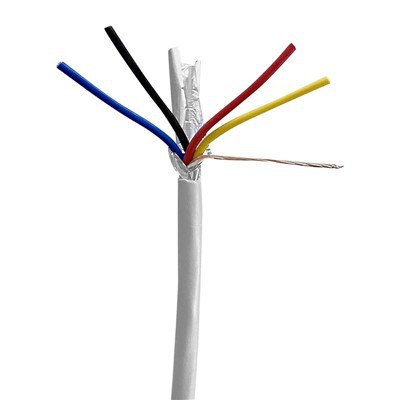
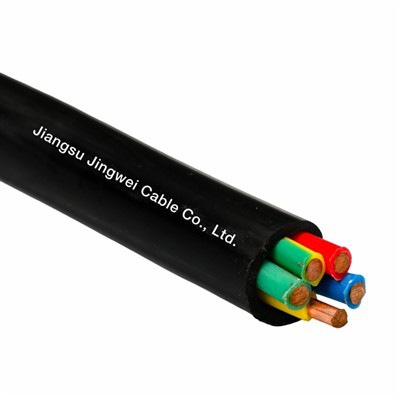
Multi Core Electrical Cable consists of multiple conductors within a single cable jacket. These cables are often used in applications where multiple electrical signals or power sources need to be transmitted simultaneously.
Compared to single core DC cables, multi - core electrical cables have the following advantages:
- Higher Current Capacity: They can carry more current due to the presence of multiple conductors.
- Redundancy: In case one conductor fails, the other conductors can still carry the electrical load, providing a higher level of reliability.
- Better Protection: The multiple layers of insulation and shielding in multi - core cables offer better protection against electromagnetic interference (EMI) and electrical noise.
However, multi - core electrical cables are also more expensive and less flexible than single core DC cables.
Application - Specific Considerations
The suitability of a single core DC cable for a battery charging circuit also depends on the specific application.
Small - Scale Applications
In small - scale battery charging applications, such as charging a mobile phone or a small battery pack, a single core DC cable is often sufficient. These applications typically have low charging currents and short cable lengths, so the limitations of single core DC cables are less of a concern.
Large - Scale Applications
For large - scale battery charging applications, such as charging electric vehicles or large - capacity battery banks, a more robust cable solution may be required. In these cases, multi - core electrical cables or single core DC cables with a large cross - sectional area may be necessary to handle the high charging currents and minimize voltage drop.
Another Application: Irrigation Control Cable
In addition to battery charging circuits, single core DC cables can also be used in other applications, such as Irrigation Control Cable. In an irrigation system, single core DC cables are used to transmit control signals and power to the irrigation valves. The simplicity and cost - effectiveness of single core DC cables make them a popular choice for these applications.
Conclusion
In conclusion, a single core DC cable can be used in a battery charging circuit, but it is important to consider the specific requirements of the application. For small - scale applications with low charging currents and short cable lengths, single core DC cables are a cost - effective and practical solution. However, for large - scale applications with high charging currents, multi - core electrical cables or single core DC cables with a large cross - sectional area may be more suitable.
If you are interested in purchasing Single Core Dc Cable for your battery charging circuit or other applications, please feel free to contact us for more information and to discuss your specific needs. Our team of experts is ready to provide you with the best cable solutions.
References
- Grover, W. H. (1993). Underground Transmission Systems for Power. IEEE Press.
- Neher, J. H., & McGrath, M. H. (1957). Calculation of the Temperature Rise and Load Capability of Cable Systems. AIEE Transactions.