What is the maximum length of a control cable?
As a control cable supplier, I often receive inquiries from customers about the maximum length of control cables. This is a crucial question, as the length of a control cable can significantly impact its performance and functionality. In this blog post, I will delve into the factors that determine the maximum length of a control cable and provide some insights to help you make informed decisions when selecting the right cable for your application.
Factors Affecting the Maximum Length of a Control Cable
Several factors come into play when determining the maximum length of a control cable. These factors include the cable's electrical properties, the signal type, the load requirements, and the environmental conditions. Let's take a closer look at each of these factors:
Electrical Properties
The electrical properties of a control cable, such as its resistance, capacitance, and inductance, play a significant role in determining its maximum length. Resistance is the opposition to the flow of electric current, and it increases with the length of the cable. Capacitance is the ability of the cable to store electrical energy, and it can cause signal distortion and attenuation over long distances. Inductance is the property of the cable that opposes changes in current, and it can also contribute to signal loss.
To minimize the effects of resistance, capacitance, and inductance, it is important to choose a cable with low resistance, low capacitance, and low inductance. This can be achieved by selecting a cable with a larger conductor size, a higher quality insulation material, and a proper shielding design.
Signal Type
The type of signal being transmitted through the control cable also affects its maximum length. Different types of signals, such as analog signals and digital signals, have different requirements for signal integrity and transmission distance.
Analog signals are continuous signals that vary in amplitude, frequency, or phase. They are more susceptible to noise and interference, and they require a higher signal-to-noise ratio to maintain signal integrity. As a result, the maximum length of an analog control cable is typically shorter than that of a digital control cable.
Digital signals, on the other hand, are discrete signals that represent binary values (0 or 1). They are less susceptible to noise and interference, and they can be transmitted over longer distances without significant signal degradation. However, digital signals require a higher data rate and a more precise timing mechanism to ensure accurate transmission.
Load Requirements
The load requirements of the control cable, such as the current and voltage ratings, also affect its maximum length. The current rating of a cable is the maximum amount of current that it can carry without overheating, and the voltage rating is the maximum voltage that it can withstand without breakdown.
If the load requirements of the control cable exceed its current or voltage ratings, the cable may overheat or break down, which can lead to signal loss or equipment damage. Therefore, it is important to choose a cable with a current and voltage rating that is appropriate for the load requirements of your application.
Environmental Conditions
The environmental conditions in which the control cable is installed also affect its maximum length. Factors such as temperature, humidity, moisture, and exposure to chemicals or radiation can all have an impact on the performance and lifespan of the cable.
For example, high temperatures can cause the insulation material of the cable to degrade, which can increase its resistance and capacitance and reduce its signal integrity. Moisture and humidity can also cause corrosion and oxidation of the cable's conductors, which can lead to signal loss and equipment failure.
To ensure the reliability and performance of the control cable in harsh environmental conditions, it is important to choose a cable with a high-quality insulation material and a proper shielding design. Additionally, the cable should be installed in a protected environment and maintained regularly to prevent damage and ensure optimal performance.
Calculating the Maximum Length of a Control Cable
To calculate the maximum length of a control cable, you need to consider the factors discussed above and use the appropriate formulas and equations. The following is a general formula for calculating the maximum length of a control cable:
[L_{max}=\frac{V_{drop}}{I\times R}]
Where:
- (L_{max}) is the maximum length of the control cable in meters
- (V_{drop}) is the maximum allowable voltage drop in volts
- (I) is the current flowing through the cable in amperes
- (R) is the resistance of the cable per unit length in ohms per meter
The maximum allowable voltage drop is typically specified by the equipment manufacturer or the relevant industry standards. It is important to ensure that the voltage drop across the control cable does not exceed this limit to maintain the proper operation of the equipment.
The resistance of the cable per unit length can be obtained from the cable manufacturer's specifications or calculated using the following formula:
[R=\frac{\rho\times L}{A}]
Where:
- (R) is the resistance of the cable in ohms
- (\rho) is the resistivity of the cable material in ohm-meters
- (L) is the length of the cable in meters
- (A) is the cross-sectional area of the cable in square meters
The resistivity of the cable material depends on the type of conductor used, such as copper or aluminum. Copper has a lower resistivity than aluminum, which means that it can carry more current with less resistance.
Examples of Maximum Cable Lengths
The maximum length of a control cable can vary depending on the specific application and the factors discussed above. Here are some examples of maximum cable lengths for different types of control cables:
Multi Conductor Control Cable
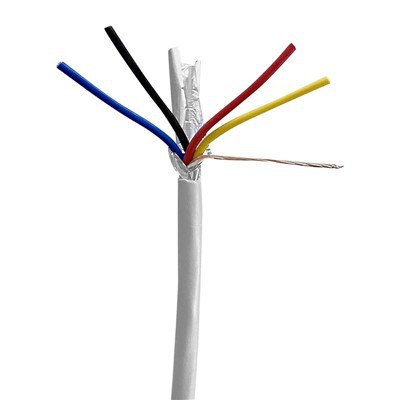
A Multi Conductor Control Cable is a cable that contains multiple conductors, each of which can be used to transmit a different signal. The maximum length of a multi conductor control cable depends on the number of conductors, the size of the conductors, the type of insulation material, and the load requirements.
For example, a multi conductor control cable with 4 conductors, each with a size of 18 AWG (American Wire Gauge), and a voltage rating of 600 volts can typically be used for a maximum length of up to 100 meters. However, if the cable is used to transmit a high-frequency signal or a large amount of current, the maximum length may be shorter.
Irrigation Control Cable
An Irrigation Control Cable is a cable that is used to control the operation of irrigation systems, such as sprinklers and valves. The maximum length of an irrigation control cable depends on the type of irrigation system, the number of zones, the size of the conductors, and the load requirements.
For example, an irrigation control cable with 2 conductors, each with a size of 14 AWG, and a voltage rating of 24 volts can typically be used for a maximum length of up to 500 meters. However, if the cable is used to control a large irrigation system with multiple zones or a high flow rate, the maximum length may be shorter.
Lighting Control Cable
A Lighting Control Cable is a cable that is used to control the operation of lighting systems, such as dimmers and switches. The maximum length of a lighting control cable depends on the type of lighting system, the number of fixtures, the size of the conductors, and the load requirements.
For example, a lighting control cable with 2 conductors, each with a size of 16 AWG, and a voltage rating of 120 volts can typically be used for a maximum length of up to 200 meters. However, if the cable is used to control a large lighting system with multiple fixtures or a high wattage, the maximum length may be shorter.
Conclusion
In conclusion, the maximum length of a control cable depends on several factors, including the cable's electrical properties, the signal type, the load requirements, and the environmental conditions. To ensure the reliability and performance of the control cable, it is important to choose a cable with the appropriate electrical properties, a proper shielding design, and a high-quality insulation material. Additionally, it is important to calculate the maximum length of the cable based on the specific application and the relevant industry standards.


If you have any questions or need further information about control cables, please feel free to contact us. We are a leading control cable supplier, and we are committed to providing our customers with high-quality products and excellent customer service. We look forward to working with you to meet your control cable needs.
References
- Electrical Engineering Handbook, Third Edition, edited by Richard C. Dorf
- National Electrical Code (NEC), NFPA 70
- Cable Manufacturer's Specifications